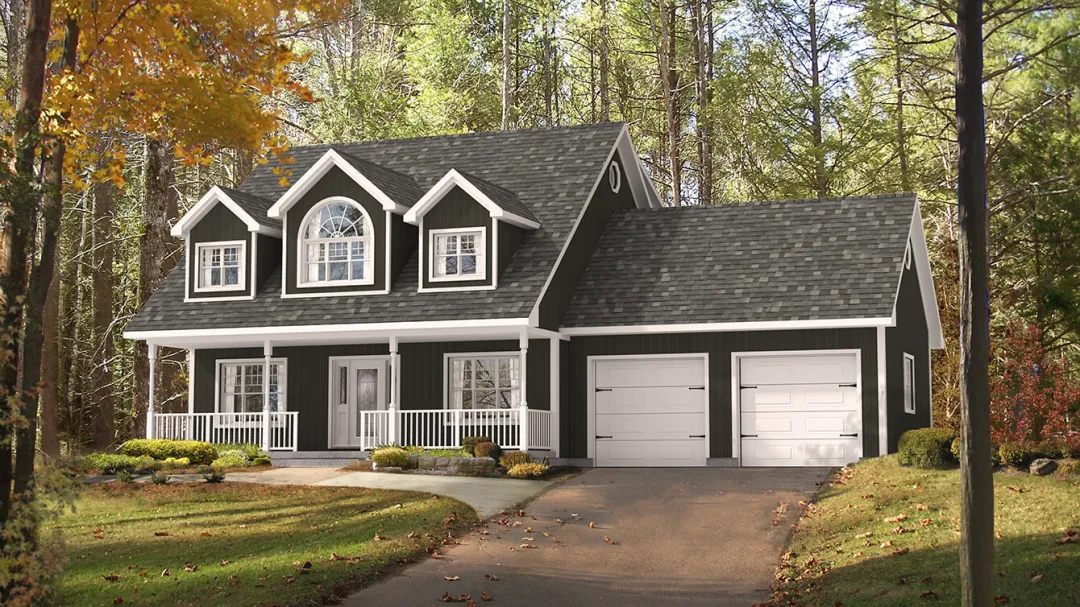

Building a custom home in Northern Ontario is not like building one anywhere else in Canada. The climate here is not a background detail. It is the first thing a good custom home builder in Northern Ontario has to plan around, before the floor plan gets drawn, before the material package gets priced, before anything else moves forward.
And yet, plenty of first-time builders underestimate it.
Why The Cold Changes Everything
Northern Ontario winters are long. Frost depths in the region regularly reach 1.5 metres or more, which means footings have to go deeper than what you would see in southern Ontario builds. Get that wrong and the structure will shift down the road. Perhaps not immediately, but eventually. Freeze-thaw cycles are the other thing that catches people off guard. The ground expands when it freezes and contracts when it thaws. That movement puts pressure on foundations, walkways, and anything else sitting on or in the ground. A custom home builder in Northern Ontario knows how to account for that pressure. One who does not work here regularly may not think about it until there is a problem.
Snow load is worth mentioning separately. Roof systems in Northern Ontario have to carry weight that simply does not apply in warmer parts of the country. Engineered trusses designed to meet or exceed the National Building Code of Canada handle that load. Raised heel trusses, specifically, allow for full insulation depth at the roof edge, which matters a great deal when temperatures drop well below zero for weeks at a time.
See also: How to Fix Plumbing Failures
The Insulation Numbers That Actually Matter
R-values are not optional in this region. They are the difference between a house that costs a reasonable amount to heat and one that drains money every winter.
The standard worth knowing: R-60 attic insulation paired with R-5 continuous plus R-22 batt insulation in the walls. That combination keeps heat in and cold out across a Northern Ontario winter. Some builders in the region cut corners here because it saves money upfront. The homeowner pays for that decision in heating costs for years afterward.
There should be Energy Star windows installed with the use of Low-E coating and filled with argon gas. Low-E coatings deflect the radiant heat back inside. On the other hand, the argon slows down the heat flow between the panes of the glass, thereby cutting drafts and cold spots around windows, places from which much heat used to escape from old houses.
What Does A Shorter Build Season Really Mean To You
Everyone who relocates from the city to Northern Ontario expects the timeline of construction to be the same everywhere. Well, it is not. There is less time for building due to the ground freezing. Frozen ground cannot be excavated. Deep freeze concrete requires certain conditions to set properly.
In these conditions, a material package makes more sense than loose procurement. Having materials, components, and blueprints checked in advance allows for getting the materials right away once the weather becomes warm enough to start building without delay.
Being one or two weeks late may mean postponing your project to the next year.
Waterfront And Rural Lot Considerations
Lakefront lots in the Almaguin Highlands and surrounding areas bring their own set of variables. Shoreline setbacks, lot grading, and the distance from services all affect what is buildable and what the site preparation will cost.
Steep lots, which are common in cottage country, require more grading work than a flat rural lot. The satellite image rarely tells the whole story. A walk of the lot before finalizing any floor plan is worth the time.
Septic system placement on a rural lot has to account for setbacks from the water and from the well. Those requirements are set by the Ontario Ministry of the Environment, Conservation and Parks, and they are not flexible. A custom home builder working in this area should be familiar with those rules before the design process starts.
Why Climate-Appropriate Design Is Not A Premium Add-On
Some buyers approach energy efficiency as an upgrade, something to consider if the budget allows. In Northern Ontario, that framing is backwards. Building to a lower thermal standard and then paying elevated heating costs for thirty years is the expensive choice, not the affordable one.
Structural Composite Lumber posts and beams, engineered floor joists, raised heel trusses, and high-performance insulation are not luxury specs. They are the right specs for this climate. A material package built around those components gives the owner a house that handles Northern Ontario winters without constant mechanical strain.
That is worth thinking about before the first design consultation, not after.
Getting The Build Right From The Start
The decisions made before a shovel goes in the ground shape everything that follows. Site preparation, structural engineering, insulation values, window performance, roof load capacity: these are not details to sort out later.
A design consultant familiar with Northern Ontario’s conditions can walk through the floor plan options, the structural specifications, and the material package before any commitments are made. That conversation is the right place to start.
Contact the design consultant at (705) 384-5365 or browse floor plans at kiddshomesandcottages.ca/model.


 By
By
 By
By