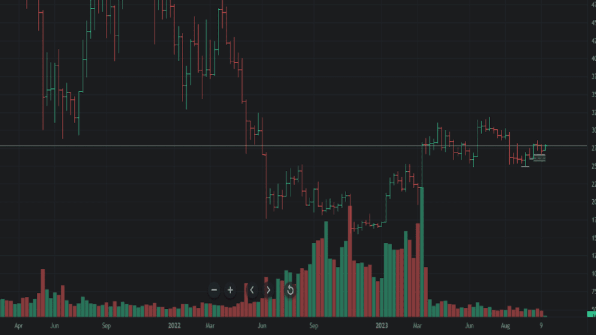

Analyzing crypto charts like a pro relies on objective data and repeatable methods. The approach combines candlestick structure, volume, and formation signals with disciplined indicators such as RSI, MACD, and momentum metrics, all mapped to predefined entry and exit rules. Backtesting thresholds guard against overfitting while risk controls cap drawdown. The analysis emphasizes resistance, support, and divergences, seeking reliability through pattern strength and timing shifts. The method remains data-driven, yet the next step reveals how to operationalize these signals in real trades.
What Crypto Chart Analysis Actually Reveals
Crypto chart analysis reveals structured information about price behavior and market psychology, distilled into measurable patterns and statistics.
The approach quantifies resistance, support, and momentum, translating noise into verifiable signals.
It emphasizes objective metrics over narrative bias, enabling charting psychology to guide decisions.
Risk management emerges from probabilistic framing, position sizing, and drawdown controls, preserving freedom within disciplined, data-driven analysis.
Reading Candlesticks, Volume, and Patterns for Trends
Candlestick patterns, trading volume, and chart formations constitute a measurable framework for identifying prevailing trends. The analysis quantifies body size, wick extent, and closing positions to infer price momentum, while volume divergence signals weakening or strengthening conviction. Candlestick psychology informs entry-exit timing without speculation.
Systematic pattern recognition, coupled with rigorous statistical thresholds, yields reproducible trend assessments and disciplined decision-making for freedom-minded traders.
Riding Indicators: RSI, MACD, and Momentum Signals
Riding indicators such as RSI, MACD, and momentum signals translate price action into quantifiable convergence or divergence metrics that guide decision-making with reduced subjectivity.
The discussion centers on rsi interpretation and macd crossovers as objective thresholds: RSI levels approaching overbought/oversold bounds reflect mean-reversion pressure, while MACD crossovers indicate momentum shifts.
Data-driven criteria enable disciplined entry, exit, and risk assessment.
Crafting a Practical Charting Workflow for Trades
A practical charting workflow systematizes the integration of indicators, price action, and risk controls into a repeatable sequence. It emphasizes disciplined data collection, predefined entry/exit criteria, and backtested thresholds. Momentum interpretation guides timing, while risk management governs position sizing and stop placement. The framework remains invariant under market noise, enabling objective, reproducible decision-making and quantified performance tracking.
See also: Social Media Technology Trends
Conclusion
From a disciplined, data-driven perspective, crypto chart analysis translates price action into objective signals: candlestick morphology, volume profiles, and pattern reliability feed quantified momentum and divergence checks. Resistance/support levels, RSI/MACD crossovers, and confirmed breakouts establish actionable thresholds. By predefining entry/exit criteria and rigorously backtesting, practitioners minimize overfitting and bias. The anticipated objection—that markets are noise—is met with reproducible workflows and performance tracking, demonstrating that disciplined methodology consistently yields statistically grounded timing signals rather than anecdotal narratives.


 By
By